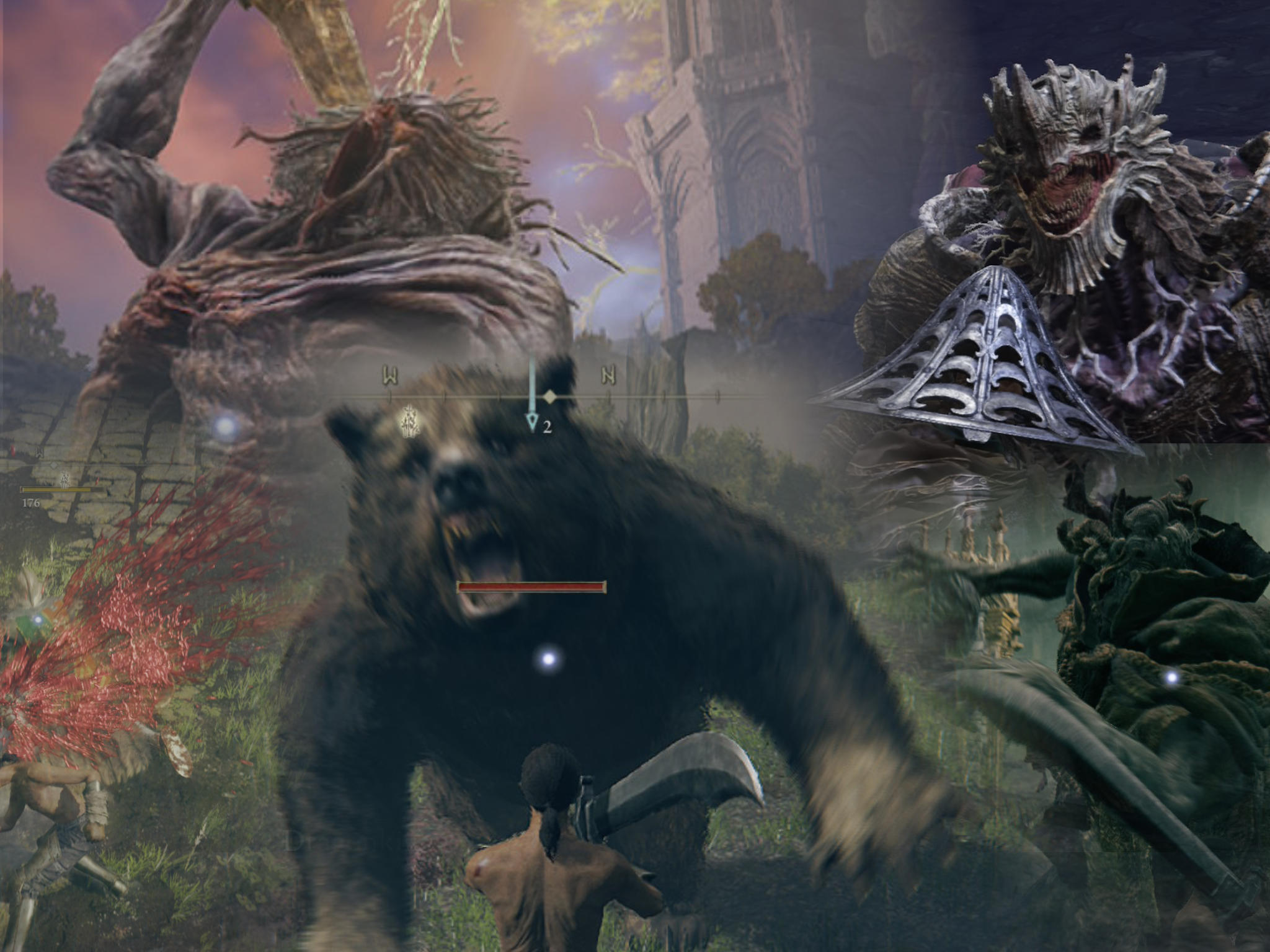
A while ago I wrote about how Breath of the Wild re-awoke my love for video games. Especially the opening sequence of the game, the Great Plateau. How it dropped you into this world and challenged you to figure out how to play it. No NPCs to over-explain things (with only the one exception), no cutscenes to suffer through, and your previous Zelda experiences not always reliable. How you were able to piece together the story just by observing the land, the enemies, and where things are in relation to each other. I ended that article by being wistful that as you cleared the Great Plateau, the more familiar “video gamey” elements reemerged. Elden Ring is all Great Plateau.
You should play Elden Ring. Put aside anything you may have heard about the game, preconceived notions about AAA, grown up, scary video games, if you’ve heard about FromSoftware and its games or what “Souls-like” means. Playing Elden Ring as a story, as a true adventure, is something everyone should experience.
One of the best things about the game is that, if you blow through the game, challenge aside (which I’ll address) you can have no idea what the story even was or what anyone in the handful of cutscenes were meaning, and I think that’s invigorating. Elden Ring really is one of those games where the more you put into it, the more you get out. I love the way Elden Ring expresses its incredibly complicated story. Unlike the kind of games I’ve complained about in the past, there are no lengthy story-time moments interrupting your game play. While there are many more NPCs than in Zelda’s Great Plateau, there are very few you have to talk to, and most of them you can straight up walk away from. Even then, you’ll leave most thinking “alright. I don’t understand any of what you just said, but alright.” When you want to power through the challenges, you can, and when you want to get immersed in the world and explore, you can.
As you’re going through the game you’re hearing all these things about fingers, demigods, okay Marika is like the queen … or a god I guess? There’s a thing called the Erdtree and I think I know what that is... So how the heck do you figure this stuff out? For the most part you have to piece it together yourself! Other than the scant dialogue (which again, mostly makes no sense the first time you encounter it), almost every item comes with flavor text that you can read. You study the map, explore the area, note what characters are where, what enemies and items are where, what the building looks like and where you’ve seen other things like that and once you gain this context you start putting it all together. The best part is that even if you put it together for yourself, there’s no telling whether or not anyone else put it together in exactly the way you did. And even then, you never really have the full picture. Like the best stories, the lack of total clarity is a feature, not a bug.
 I get the same welcome at home.
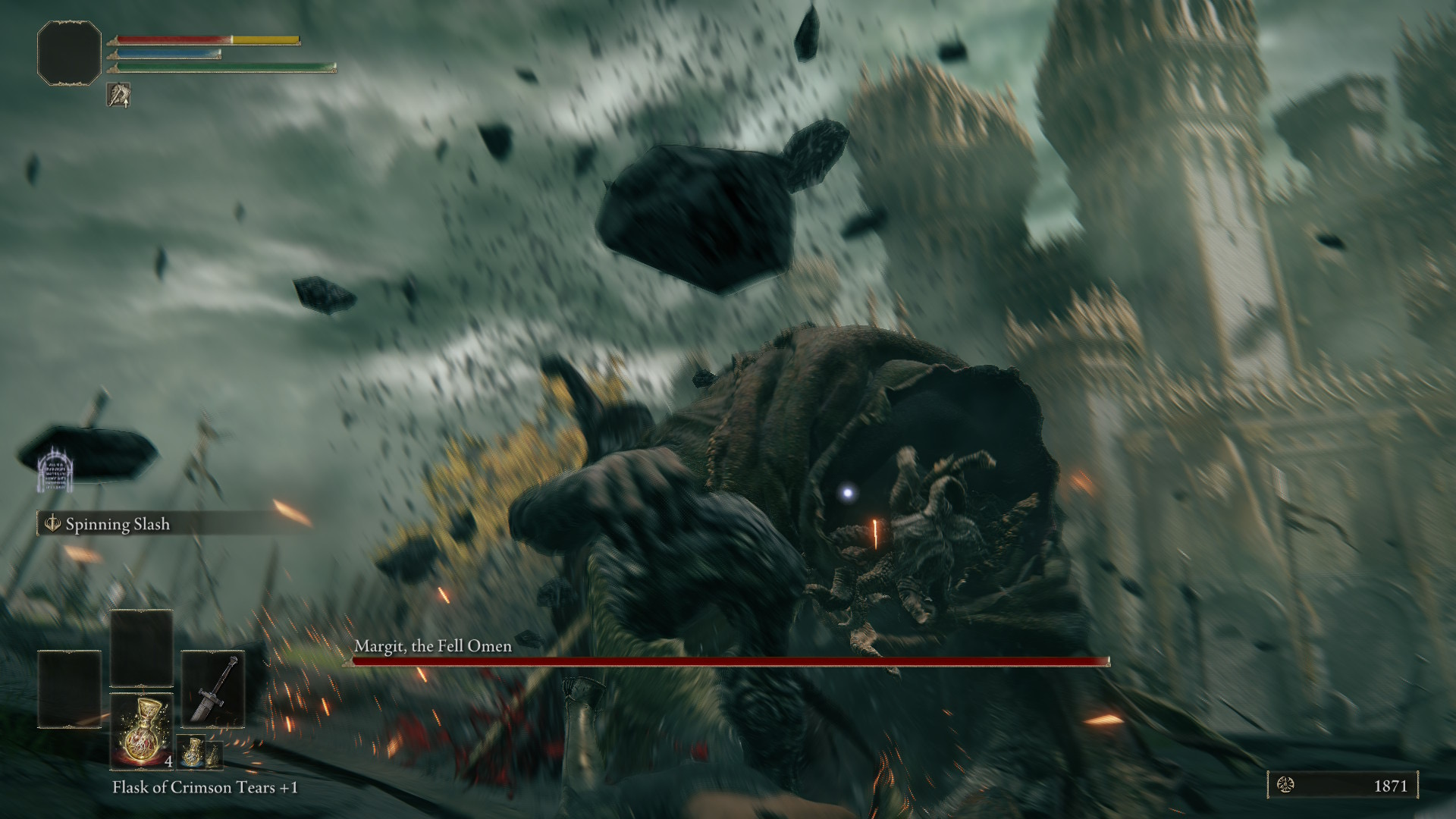
My favorite example of this is very early in the game when you get to Stormveil Castle. As you explore the castle you come across several places where countless arms and legs are hanging like decorations. It’s not just “spooky video game setting” though because the lord of the castle is Godrick the Grafted. When we meet him, he sports an array of superfluous arms attached to his back. We see him do this with a dragon’s head during our fight with him. A mini-boss in the castle is a grafted scion, another weirdo with after-market body parts attached to him — even the annoying birds are missing their legs, replaced with knives! Then you remember on the way to Stormveil you (likely) met Roderika who tells you how all her friends lost their limbs and heads by Stormveil and was worried about the same happening to her. It all fits together without anyone sitting you down and telling you “this Godrick guy is a real creep who does all this weirdo stuff. Mr. Tarnished you have to go here and here and help stop this guy!”. It’s just you noticing all these things yourself. But then you also see how the castle walls have holes on them, like maybe there was a battle there, but the holes don’t really look like explosions they look more like rot. You can explore this “rot” lower in the castle and find it comes from the sewers underneath. And then you find what’s under the castle (and that is a spoiler.) And that’s all completely elective (or, oops I found this by mistake) and unsaid and missable. It’s genius!
 Materia in the chat.
My beloved Final Fantasy VII got the video game industry stuck on telling a story in a video game one way. Stop the game to tell the story. Elden Ring essentially never does this. Even as you finish the game and kickoff whichever ending, you’re still left like “oh, that’s all it’s going to show?” It’s much closer to “Thank you Mario! Press Start to continue a new quest,” than something like Red Dead Redemption 2 where you might fully put the controller down to sit back and watch. Now, in Final Fantasy’s heyday, there were technical limitations in how you could tell a story — and telling a story in a very narrative and cinematic way was still very new and fresh so there certainly was and is value there. But for twenty (thirty?) years after, games, especially “serious AAA games” didn’t evolve past this. FromSoftware felt my pain and dared to trust the player that the story was there if they wanted to look for it in their Souls series. Heck, even whole chapters of the game are left up to the player to uncover. Add a dash of open world, and you have a new type of narrative, a type of art, that I think can only exist in a video game.
Talking about FromSoftware daring the player in their Souls series; it’s time to address the elephant in the room. If you’ve heard anything about Elden Ring, or any of FromSoft’s other games, it’s likely that it’s hard. I’m not going to refute that, but I will say it is manageable and rewarding. Every step of the way the game has you learning how to approach the game. You’re not going to be Mario speedrunning the game holding run and squashing every enemy. Though you’ll find holding run is a good policy. The game even has a brilliant tutorial dungeon to arm you with the skills you’ll need.
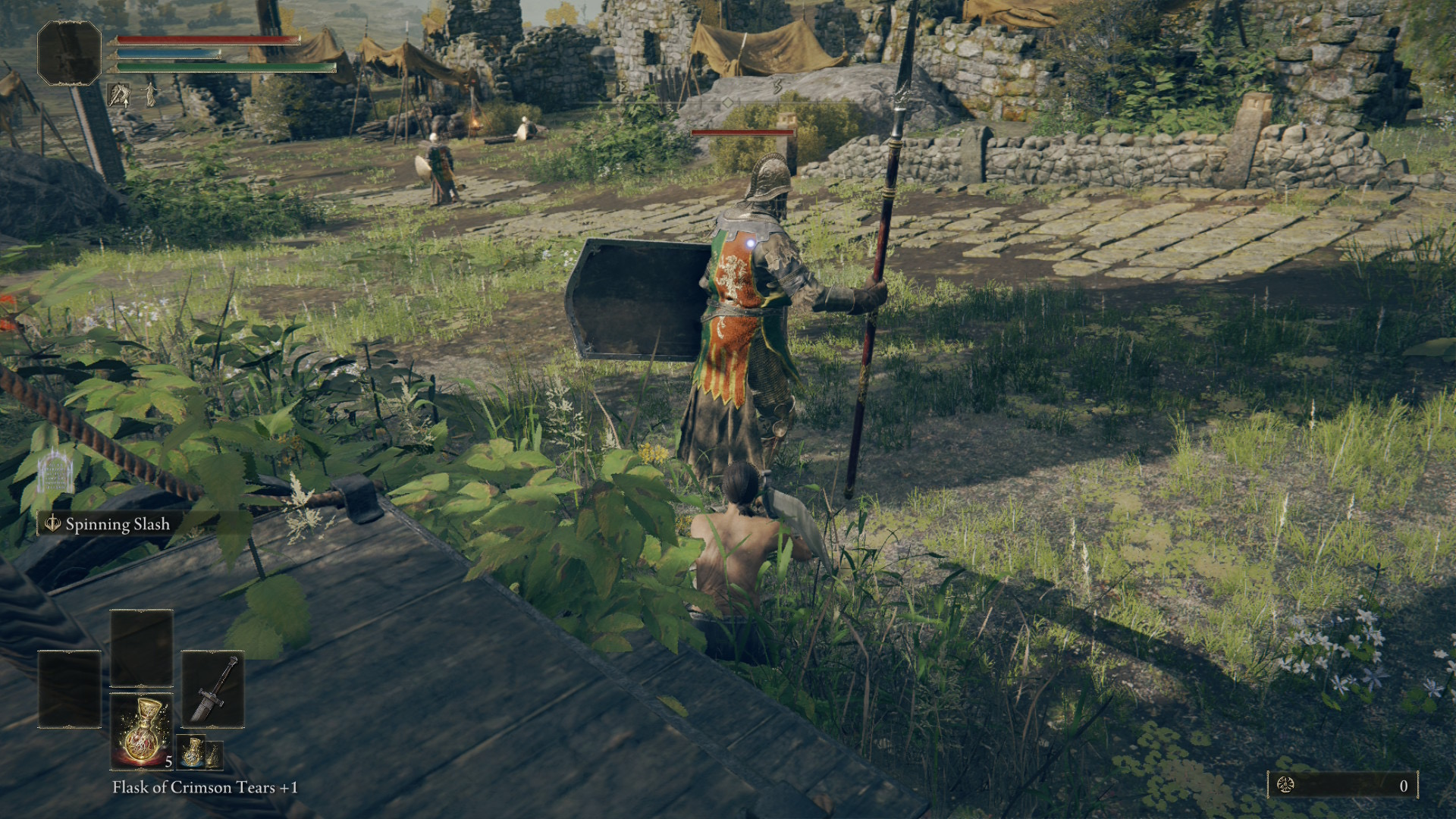 My first stop after becoming Elden Lord.
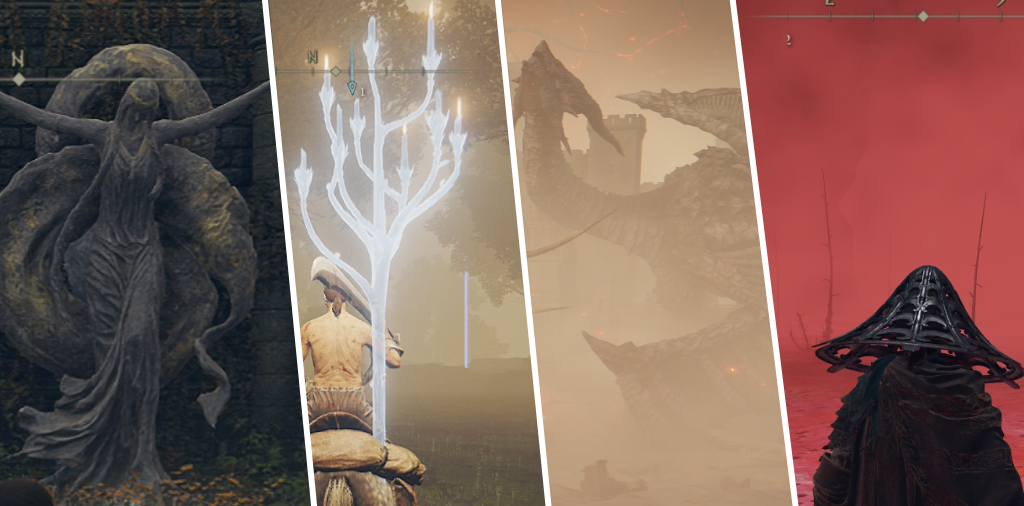
The game leads you to Gatefront Ruins, a camp of soldiers patrolling a crumbled fort with a save point next to it. There are walls, carriages with loot; guards standing, guards patrolling, guards resting, guards flanked by wolves, and a knight acting as the boss of this dungeon-in-miniature. There’s a lot of variety in the obstacles given, but some rewards that are very much worth the early-game effort. The game gives you a save point and the ability to use summons — it even gifts you Torrent (your horse) when you first visit the save point — you have the full kit at your disposal to tackle Gatefront at your own speed. Without a single piece of gameplay exposition, it gives you free rein to learn how to approach the challenge. Just as the game doesn’t belabor the story, the same is true for the gameplay loop. You learn how to sneak up on enemies, which enemies to prioritize, how to plan your routes. With two save points in the near vicinity (and a Statue of Marika acting as a third spawn point), when you inevitably meet the “You Died” screen, your dropped runes are never too far away or hard to retrieve and you get another chance to tweak your plan of attack. As safe an environment to learn as the game allows. Explore, try to deal with danger, if you fail take what you learned to go back.
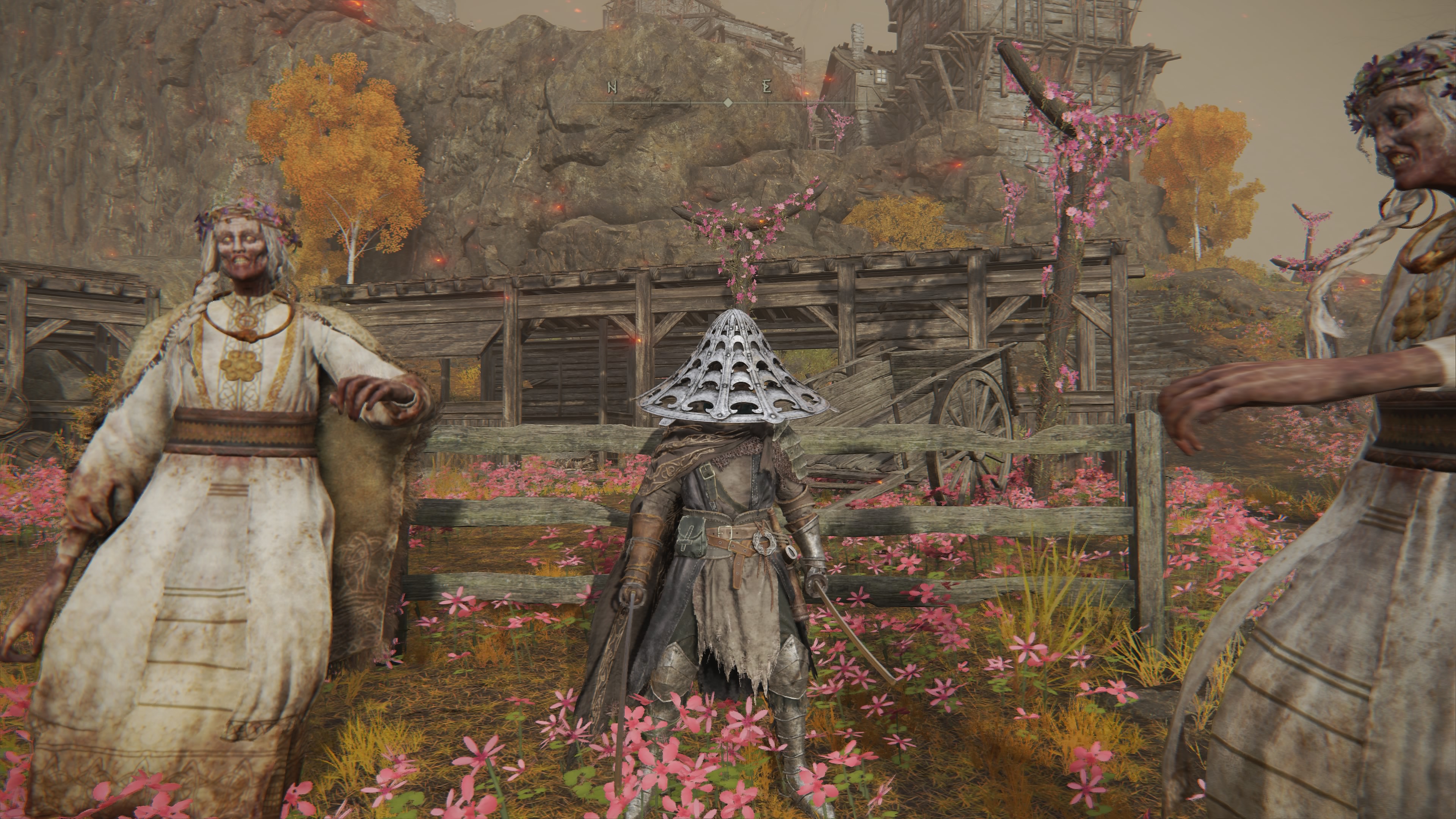 We saw you from across The Roundtable Hold and like your vibe.
Even the real boss fights are like this. The more you try it, the more you learn how to deal and eventually you’ll get a run where you get close enough that you have something to chase. And then you won’t get that close again in the next fourteen tries, but eventually you’ll get it! Or if not, you can always go back to a place you’ve “learned” like Gatefront to grind runes for levels. All I can say is, if I can do it — anyone can.
But it’s not just to be brutal, it really puts you in the narrative. As clueless as you are about the world and what’s going on you also feel as hopeless and overwhelmed and at terrible odds you, the Tarnished, should feel. And as you master the game and the world, so do you as the Tarnished.
It’s worth the occasional frustration and confusion. The feeling of relief when you beat that boss, or snag that weapon so you can get the heck out of these annoying catacombs. For me it was being stuck at the first grace point in Leyndell for weeks. Leyndell has so many branching disparate paths I wasn’t sure which wall I needed to throw myself at. The relief I felt when I finally found the next save point was such a relief — even if that meant I was now stuck at the Godfrey boss fight. Where I felt that may not be where you feel that revelation, but I think that experience is universal to everyone that jumps into the Lands Between.
 Believe it or not this is both not gibberish, and still meaningless.
No less than half of the fun is engaging with the community. Not just the wikis and the guides for when you get stuck. But the in-depth lore guides and theories highlight the complexities and details of the world FromSoft made. For every one thing the game comes out and says literally, there are five points in the subtext, in the setting, in the game design and you might miss them. Especially as you train yourself to start noticing things. Even this apocryphal (at best) content can be part of the experience. I know I’ve formulated my own theories as I’ve progressed through the game. The best video games are the ones that you don’t stop playing just because you turned the console off.
Elden Ring and Breath of the Wild are two of the most important modern video games. When FromSoft made Demon’s Souls, they clearly took notes from games of yore, like the original Legend of Zelda. Tough, but fully open and full of options, bereft of much information letting the player pore over the instruction manual and straight up piecing information together. When Nintendo was faced with “getting with the times” after their post-Wii stumbles, you can feel the Dark Souls influence in Breath of the Wild. Then FromSoft reciprocated again when making Elden Ring. It is a one-of-a-kind experience no other piece of media offers.
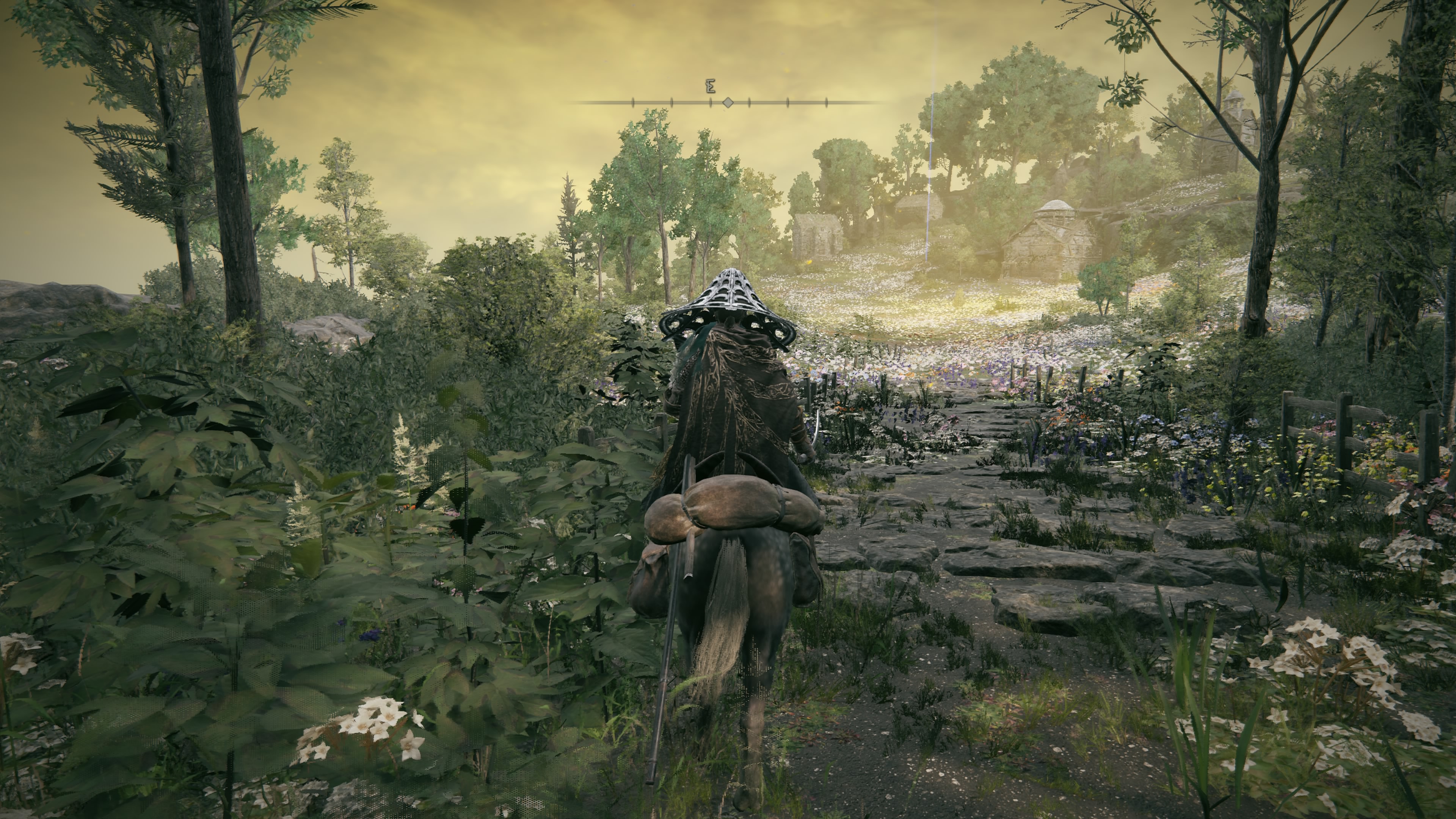 Life moves a little slower here in the Lands Between. And that's the way we like it.